 Website


chatgpt vs claude for websites
3-Stage ChatGPT vs Claude Workflow for AI Website Builders
ChatGPT or Claude for your site? Prototype on a fast model, escalate for production work, and switch assistants on WebsitePublisher without starting over.

Start prototypes with a fast, low-cost model like OpenAI’s GPT-6 Luna or Anthropic’s Claude Haiku 5.5, then escalate to OpenAI’s GPT-6 Astra or Claude Opus 5.5 once you need production code or complex integrations. Before you switch models at all, raise the reasoning or effort setting on the model you already have: it’s often the cheaper fix. WebsitePublisher, the AI web platform, works with ChatGPT, Claude and other AI assistants on the same project, so you can follow this escalation pattern without starting over.
TL;DR:
- Prototype on a fast, low-cost model like GPT-6 Luna or Claude Haiku 5.5, then move to a stronger model for production work.
- Stronger models like GPT-6 Astra or Claude Opus 5.5 bring better layout judgment and larger context windows, but the right choice still depends on the task.
- Raising the reasoning effort setting on your current model is often a cheaper way to improve output than switching to a more advanced model.
- Tool calling and sandboxed code execution let the model check and connect its own code, so you do less copying, testing and wiring by hand.
- Batch generation benefits from using cheaper models for routine pages and escalating only failing cases to higher-effort models, keeping costs manageable while maintaining quality.
- On WebsitePublisher your project lives on the platform, not in the chat, so you can switch models or assistants mid-project without rebuilding anything.
Table of Contents
- Capability differences that matter for site generation
- When to use which model for a website task
- Tune settings before you swap models
- Tool calling is what turns a chat into a live site
- How a multi-model build works on WebsitePublisher
- Budgeting tokens, pro modes, and batch runs
- What this means for freelancers, agencies, and small teams
- Try the ChatGPT and Claude workflow on WebsitePublisher
- FAQ
- Sources
Capability differences that matter for site generation
ChatGPT and Claude aren’t interchangeable once you look past basic chat output. For website work, the differences show up in layout judgment, coding stamina, and how much content a single session can hold.
- Front-end polish: OpenAI notes that its GPT-6 models have better judgment on layout and visual hierarchy, which can show up in the spacing and typography of generated components.
- Long-horizon coding: Anthropic positions Claude Opus 5.5 as the default for most workloads, with documented effort tuning for sustained, multi-step coding sessions.
- Context and output limits: Larger context windows let a model hold more of your site’s existing pages and components in view at once, which reduces the chance it contradicts earlier work when generating a new page.
- Tool calling: With Claude’s tool use, the model decides when a request needs a tool and calls it. Server tools run on Anthropic’s side and client tools run in your app. This matters when your assistant needs to wire up integrations without a manual handoff.
None of this makes one model strictly better. It means you match the model to the job, which is why WebsitePublisher lets you work with the AI assistant of your choice instead of locking you into one vendor.
When to use which model for a website task
Different stages of a build call for different tradeoffs between speed, cost, and depth of reasoning.
- Prototyping a new page or site structure: use a fast, low-cost model (GPT-6 Luna or Claude Haiku 5.5) with reasoning effort left low. You want quick iterations on copy and layout, not perfect code.
- Production code or complex integrations: switch to a stronger model (GPT-6 Astra or Claude Opus 5.5) and raise the effort setting, or use pro mode in ChatGPT. On Claude Opus 5.5 the default effort is medium; Anthropic’s guidance is to start there and raise it when the results fall short.
- Batch generation across many pages: run the cheaper model for the bulk of pages, then route only the pages that fail a quality check to the stronger model. This keeps your average cost low while still catching edge cases.
This pattern, prototype cheap and escalate selectively, mirrors how Anthropic describes combining models: an executor that escalates hard decisions to an advisor.
Tune settings before you swap models
The single highest-leverage change you can make, before touching which model you’re on, is adjusting reasoning effort. Both OpenAI’s and Anthropic’s model guidance describe effort as a way to trade quality against cost and speed within the same model, and a higher setting on your current model is often cheaper than paying for a frontier model you don’t need.
- Raise reasoning effort or switch to pro mode on your current model first, and measure the result before you change models.
- Use pro or slow modes only for tasks where standard mode has already produced a wrong or incomplete output, since pro mode changes token accounting and latency.
- Run a short, blind A/B comparison on a handful of representative tasks: generate the same component or page with two settings, then compare functional correctness, layout fidelity, and integration wiring side by side.
Pro Tip: Keep a running list of three or four representative website tasks (a pricing page, a contact form, a product grid) and rerun them any time you consider changing models or settings, so your comparison is based on the same baseline every time.
Tool calling is what turns a chat into a live site
Without tools, an AI assistant can only write code and hand it back to you to copy, paste, host and test. With tools, it can act on your behalf, and that is the step from “writes code” to “ships a working site.”
- How tool use works: with Claude’s tool use, the model decides when a request needs a tool and calls it. Server tools run on Anthropic’s side; client tools run in the app or connector that provides them.
- What that means on WebsitePublisher: our connector (MCP) gives your assistant the tools to create pages, set up forms, store data and connect integrations. Your assistant calls them, and the result is live on a real web address, without glue code from you.
- Where code execution fits: Anthropic’s code execution tool runs sandboxed Bash and file operations, which is handy for checking a snippet or processing an image inside the chat. Your site doesn’t depend on it: building and publishing happen through WebsitePublisher’s tools.
How a multi-model build works on WebsitePublisher
The same pattern works for freelance, small business, and agency projects: prototype fast, then harden the parts that matter. Here’s the workflow we recommend.
- Prototype with a fast model. Connect ChatGPT or Claude to WebsitePublisher and describe the site in plain language at low reasoning effort. Your assistant creates the page structure, copy, and a first layout, and each page is live on its own web address right away.
- Escalate for logic and integrations. Once the structure is right, switch to a stronger model or a higher effort setting to add forms, payments, member logins, or data, using WebsitePublisher’s built-in integrations through tool calls.
- Review and refine on the live page. Every change goes live immediately; there’s no separate deploy step. Check the page in your browser, ask your assistant for changes, or adjust text, images, and layout directly in the visual editor.
Because your project lives on WebsitePublisher and not inside a chat, switching models or assistants doesn’t lose anything. Pages, data, integrations, and project memory carry over between sessions and between assistants.
Pro Tip: Do your structural changes before you escalate models. Editing layout after you’ve generated production code usually costs more tokens than getting the structure right during the cheap prototyping pass.
Budgeting tokens, pro modes, and batch runs
Cost on a website build comes from three places: tokens per request, whether you’re in pro mode, and how often you regenerate the same page. OpenAI’s documentation notes that pro mode changes token accounting and latency, so it’s worth tracking separately from standard requests.
- Measure cost per task, not per project: a pricing page and a product catalog page don’t cost the same to generate or regenerate.
- Batch bulk pages (directory listings, location pages) on a cheaper model, and reserve the stronger model for pages with complex logic or integrations.
- Before standardizing your whole team on a frontier model, check whether effort tuning on a cheaper model already closes most of the quality gap for your typical tasks.
What this means for freelancers, agencies, and small teams
Whether you build for yourself or for clients, the approach is the same: prototype fast and loose, then run a hardened, higher-effort pass before anything reaches a client. A common mistake is skipping effort tuning entirely and jumping straight to the most expensive model available, which adds cost without fixing the actual problem. Because WebsitePublisher works with ChatGPT, Claude, and other assistants on the same project, with reusable components and browser-based editing, switching models mid-project doesn’t mean rebuilding pages from scratch.
Try the ChatGPT and Claude workflow on WebsitePublisher
WebsitePublisher is the AI web platform: your AI assistant builds and publishes websites and apps, and you just talk. You don’t have to choose one model and live with it. Prototype a site with ChatGPT, escalate to Claude for a tricky integration, and keep editing the result in your browser without regenerating content or losing your components.
More than 100 built-in integrations, including email, payments, forms, and member logins, are ready for your assistant to use, so most of the “glue code” a stronger model would otherwise write by hand is already handled. Credentials stay in an encrypted vault the AI never sees.
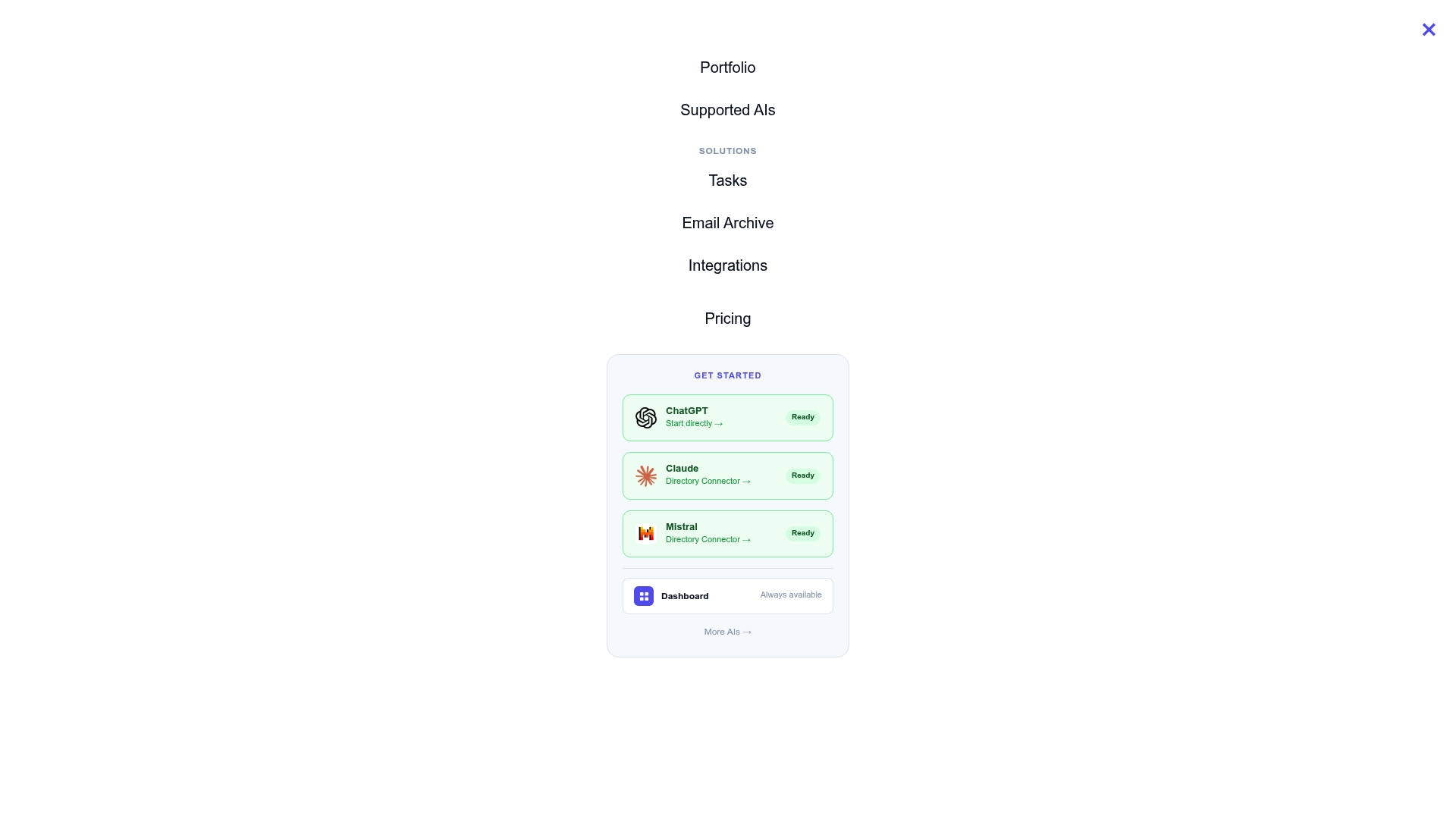
See the full list on our integrations page, check which AI assistants are supported, or go straight to pricing and start building for free.

FAQ
Should I start with ChatGPT or Claude for a new website?
Start with whichever model’s fast tier you already have access to, since the quality gap at the prototyping stage is small and effort tuning matters more than the choice itself. Escalate to GPT-6 Astra or Claude Opus 5.5 once you need production code or complex integrations.
Do I need to change models to get better code output?
Not always. Raising the reasoning or effort setting on your current model is often cheaper and faster than switching models entirely, so try that first.
Does my AI assistant need code execution to build a site?
Not on WebsitePublisher. Your assistant builds through WebsitePublisher’s tools via the connector, and every change is live right away. Code execution, such as Anthropic’s sandboxed code execution tool, can still be handy for checking a snippet or processing an image in the chat.
Can I switch between ChatGPT and Claude on the same WebsitePublisher project?
Yes. Your pages, data, integrations, and project memory live on WebsitePublisher, not in the chat, so you can prototype with one assistant and continue with another without rebuilding the site.
Is a cheaper model good enough for batch-generating many pages?
For bulk pages like directory listings, a cheaper model is usually sufficient, especially when you route only the pages that fail a quality check to a stronger model. This keeps your average cost down while still catching the edge cases that need deeper reasoning.
Sources
- Using GPT-6 | OpenAI API
- Choosing the right model | Anthropic
- Tool use overview | Anthropic
- Code execution tool | Anthropic
Recommended
Build your site the same way
Describe what you want. Your AI builds and publishes it — with the full stack behind it: data, auth, forms, payments, integrations and hosting.
See how it works →